
 View Flyer
 Rx Refill
 Directions
Discovering head lice in your household can feel like an overwhelming ordeal. The persistent itching, the endless combing, and the worry about spreading it further is enough to stress out any parent. Pharmacists understand that dealing with head lice is a common challenge for Canadian families, and readily available to help navigate the situation with confidence. Whether you’re dealing with an active infestation or just looking to be prepared, knowledge is your most effective tool.
In this guide, we’ll walk you through everything you need to know about head lice treatment. From identifying symptoms to effective removal strategies, we’ll help your family get back to routine as quickly as possible.
What Is Head Lice Treatment?
Head lice (Pediculus humanus capitis) are tiny, wingless insects that live on the human scalp and feed on small amounts of blood. While they are a nuisance and can be socially uncomfortable, they do not spread disease. Head lice treatment is the systematic process of eliminating these insects and their eggs (nits) from the scalp and hair.
The primary goals of any lice treatment protocol are twofold: first, to kill live lice that are currently active, and second, to remove or neutralize the nits to prevent a new generation from hatching and causing reinfestation. Because lice have evolved to survive various conditions, effective treatment often requires a combination of pharmacological interventions and mechanical removal methods, such as meticulous combing.
Understanding the life cycle of lice, which includes the egg stage, the nymph stage, and the adult stage, is crucial for successful treatment.
Who Gets Head Lice?
Can Anyone Get Head Lice?
Yes! Head lice do not discriminate based on socio-economic status, cleanliness, or age. Anyone who has hair on their head can potentially host head lice. It is a common misconception that lice prefer dirty hair; in fact, lice are just as happy to inhabit clean, well-groomed hair as any other.
Are School-Aged Children More At Risk?
School-aged children, particularly those between the ages of 3 and 11, are most commonly affected. This is primarily due to their social behaviours. In school and camp settings, children are frequently engaged in activities that involve close head-to-head contact, such as whispering, playing, or working in groups.
Because they are often in environments where they are in close proximity for extended periods, the opportunity for lice to crawl from one head to another is significantly higher.
Can Adults Get Head Lice From Children?
Yes, adults can get head lice from children. While children are the most common carriers, they can easily pass lice to parents, caregivers, and other adults in the home. If a child has an active infestation, it is prudent for all household members to be checked, as lice do not distinguish between adult and child hosts. 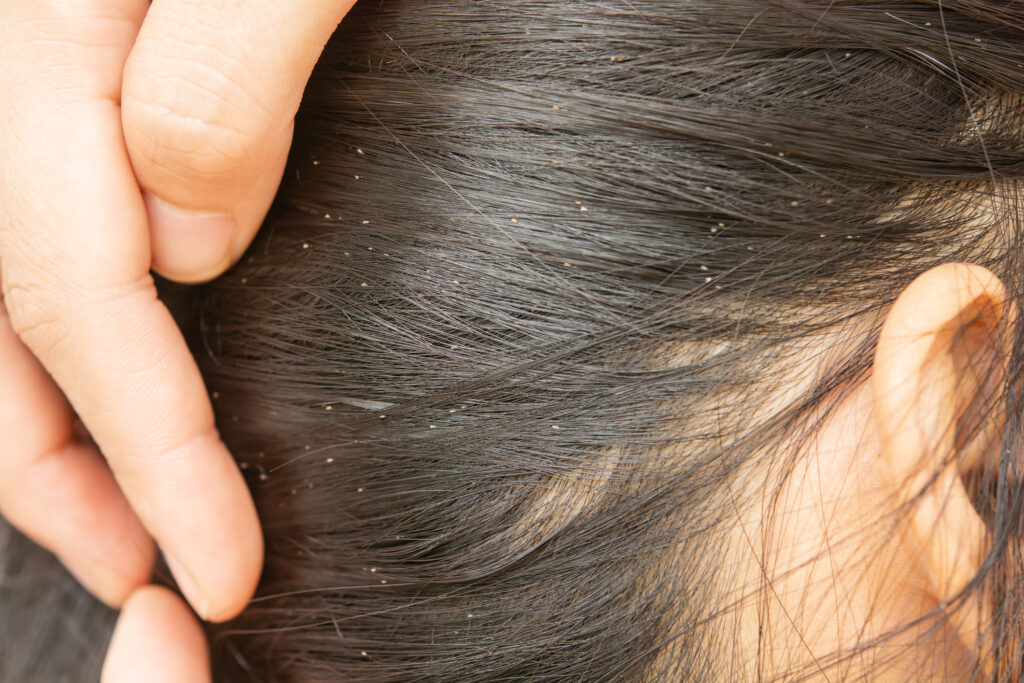
Signs and Symptoms of Head Lice Infestation
Identifying a lice infestation early is key to managing it effectively.
- Persistent scalp itching: This is the most common symptom, caused by an allergic reaction to lice saliva. The itching often intensifies at night.
- Tickling sensation in the hair: Many people report the sensation of something crawling or moving on their scalp.
- Visible lice on the scalp or hair: Adult lice are about the size of a sesame seed and can be tan, whitish-grey, or grey-brown. They are fast, so they can be hard to spot.
- Nits (lice eggs) attached to hair shafts: These are tiny, oval-shaped, and usually yellowish or white. They look like dandruff but cannot be easily flicked off because they are firmly glued to the hair shaft.
- Red bumps on the scalp, neck, or shoulders: These are often the result of the body’s reaction to lice bites.
- Irritability and difficulty sleeping: Because itching is often worse at night, this can disrupt sleep for both children and adults.
- Secondary skin infections from scratching: Persistent scratching can break the skin, leading to sores that may become infected
What Causes Head Lice?
It is vital to reiterate that head lice are not a reflection of poor hygiene, spread easily and can affect anyone.
Direct Head-to-Head Contact
This is the most common mode of transmission. Lice cannot jump or fly; they crawl. Therefore, they require direct contact to move from one host to another.
Sharing Personal Items
Sharing items that touch the head such as brushes, combs, hats, hair accessories, headphones, or pillows can facilitate the spread, although this is less common than direct contact.
Close Contact in Schools, Camps, and Households
Any environment where people congregate and spend significant time in close proximity provides an opportunity for transmission. This includes classrooms, sleepovers, and sports team locker rooms.
Complications of Untreated Head Lice
Left untreated, head lice can lead to several complications, including:
- Persistent itching and discomfort: Chronic itching can be incredibly distracting and distressing.
- Skin irritation and bacterial infections: If scratching breaks the skin, bacteria can enter, leading to potential secondary infections that may require medical attention.
- Sleep disturbances: The nocturnal nature of the itching can significantly impact a person’s quality of rest.
- Stress and social embarrassment: There is often an unfair social stigma associated with head lice, which can cause stress for families.
Head Lice Diagnosis
Diagnosing head lice involves a thorough visual inspection. Use a bright light and a magnifying glass to check the scalp, especially behind the ears and at the nape of the neck. Using a fine-toothed lice comb on wet hair (often with a conditioner to make lice move slower) is one of the most effective ways to identify an active infestation.
If you are unsure about your diagnosis, or if you suspect a secondary infection, it is always wise to seek professional evaluation from your local pharmacist. 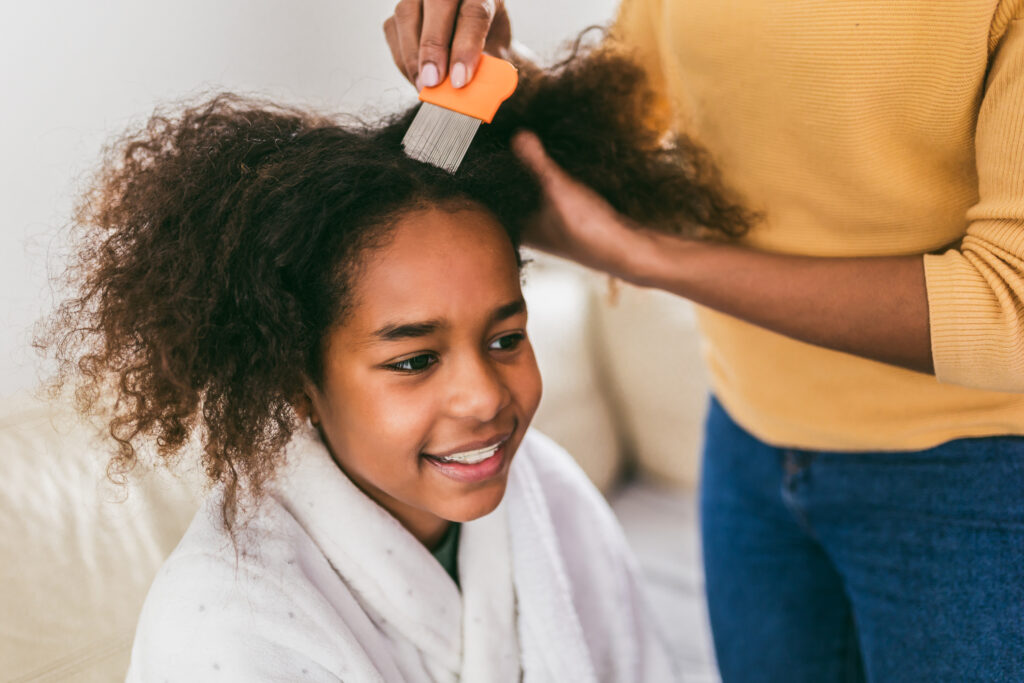
Head Lice Treatment
So, how to treat head lice. First and foremost, treating head lice requires patience and consistency.
There are many effective lice removal products “behind the counter” at your local pharmacy, such as lice killing shampoos and Nix creme rinse, as well as Nyda or Resultz. These treatments are formulated to kill live lice and can be obtained by consulting with your pharmacist. Always follow the product instructions carefully regarding application time and rinsing.
Wet-Combing and Manual Nit Removal
This is a labour-intensive but highly effective process. Using a specialized fine-toothed nit comb technique, systematically go through small sections of damp hair to remove lice and nits.
Repeating Treatment When Necessary
Most treatments require a second application after 7 to 10 days to kill any newly hatched lice before they become mature enough to reproduce.
Treating Household Contacts
If one person in the home has lice, everyone should be checked, though only those in the household with lice or nits require treatment. Treating someone before they contract lice will not prevent them from getting it.
If multiple family members are infested, they should all be treated at the same time to prevent a “ping-pong” effect where the lice are simply passed back and forth.
Head Lice Medications and Home Remedies
While medications are the cornerstone of treatment, supporting measures are also crucial.
- Wet-combing: As mentioned, this is an excellent mechanical tool for removal.
- Fine-toothed nit combs: Ensure you have a high-quality metal comb, as these are often more durable and effective than plastic versions.
- Washing recently used items: Wash clothing, bedding, and towels that have been used in the last 48 hours in hot water.
- Vacuuming: Vacuum carpets and furniture to catch any lice that may have fallen off a host. (Remember to include stuffed toys and hats, which can be sealed in a plastic bag for two weeks if washing isn’t possible).
Cleaning Your Home After Head Lice Treatment
Cleaning is not about sterilizing your home, but about reducing the risk of re-exposure. Focus your efforts on items that have been in direct contact with the affected person’s head:
- Washing clothes, bedding, and towels: Use a hot water cycle and high-heat dryer for at least 20 minutes.
- Cleaning combs, brushes, and hair accessories: Soak these items in hot water (at least 60°C) for 5-10 minutes.
- What household items do not need treatment? Lice cannot survive long away from a human host. You do not need to spray your entire house with pesticides or perform deep cleans beyond what is recommended for high-contact items.
Preventing Lice Spread
Prevention is the best medicine:
- Avoid head-to-head contact: Keep heads apart during play and close activities.
- Do not share personal hair items: Teach children that items like hats, brushes, and headphones are personal.
- Regular scalp checks: Especially during outbreaks at school or camp, perform routine checks for children.
- Early treatment: Address any signs of lice immediately to stop the spread to others.
- Educate your family: Talk to your children about lice in a non-stigmatizing way so they know what to avoid.
When Should I Call a Healthcare Provider?
Reach out to your pharmacist or doctor if:
- Behind-the-counter treatments are not working after multiple applications.
- Live lice remain present after you have completed the full course of treatment.
- Signs of scalp infection develop (e.g., persistent redness, swelling, pus, or fever).
- You are pregnant, breastfeeding, or have specific concerns about treating young children.
People Also Ask
What is the most effective head lice treatment?
The “most effective” treatment is often a combination of an approved medicated product and diligent, mechanical nit removal.
How do I know if head lice treatment worked?
You will know it worked when you can no longer find any live, moving lice or new, intact nits during consistent scalp checks over two weeks.
Can head lice go away without treatment?
It is highly unlikely. Because they reproduce so quickly, professional intervention is necessary.
How long does it take to get rid of head lice?
With consistent application of treatment and combing, it usually takes about two weeks to fully resolve an infestation.
Do I need to wash all my bedding if I have head lice?
You only need to wash bedding used by the affected person in the last 48 hours.
Can adults get head lice?
Yes, adults can get head lice!
What kills lice eggs instantly?
There is no single “instant” kill for all eggs; consistency and manual removal are key.
Final Key Points About Head Lice Treatment
Managing head lice can be stressful, but remember that you are not alone. It is a common, manageable condition when using recommended medications and consistent combing techniques. Patience is your greatest ally during this time. Keep a close eye on your household, follow treatment instructions to the letter, and don’t hesitate to reach out for support if the lice are proving persistent.
Ask your healthcare provider at your closest PharmaChoice pharmacy near you, and get the proper head lice treatment today!