Here Are 5 Tips To Help You Plan
- Take the “careful, not fearful” approach and ensure your child is prepared
- Review your child’s emergency plan and what to do in case of a reaction
- Ensure that your child’s auto-injectors are up-to-date and effective
- Ensure your child is carrying their auto-injector or other allergy medication
- Remind your child to not eat candy until it is sorted with an adult
Halloween fun doesn’t have to end when your child gets home. You can make it fun to await the sorting of candy at home. Ideas include exchanging the treats for a prize until they can be sorted, making it part of the Halloween event. Providing an even more desired treat when an “allergy” one is found. Discuss donating candy that cannot be eaten to the food bank, or a senior’s home.
For treat and party providers, knowing that peanut allergy is only one of many food allergies is important. Treats that are packaged with ingredient labels will ensure that parents can easily assess their safety. Try giving non-food treats such as stickers, pencils, or craft kits which are great alternatives that are inexpensive, fun, and unique.
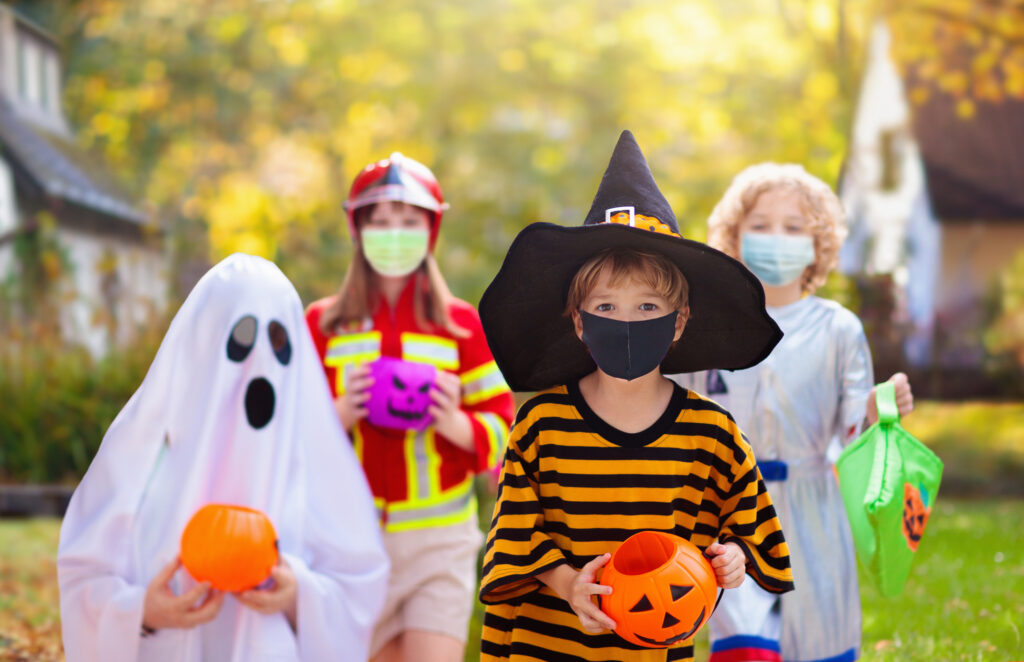
To ensure a safe treating experience, enlist your child in discussing:
- How to incorporate a mask into their costume choice
- Distancing at doors and waiting in line
- Using normal voice for “trick or treat” or “thanks”